

How Similar To Your Neighbors Is Your Genetic Makeup
Nosotros usually think of heredity in relatively simple terms: You've got your father'southward eyes, your female parent's nose, and probable a few health bug from both. But the things you can inherit from your parents are far broader than your physical advent or wellbeing. In fact, your genome dictates—or at to the lowest degree heavily influences—many areas of your life. From the music and nutrient you like to your driving skills (or lack thereof), here are 27 ways your life is shaped by your inherited genetic traits.

Now, if y'all get defenseless cheating, don't endeavour to blame information technology on your genes. But there is some prove that genetic variations might be a predictor of infidelity. In a 2014 written report published inEvolution and Human Behavior, scientists institute the mode our brains process the hormone vasopressin may partially explain why some people cheat and others don't. Merely it'south worth remembering that, just considering a person has the gene, that doesn't necessarily mean they'll be unfaithful. Equally with near inherited traits, environment and upbringing count for a lot.

If y'all toss and plow at bedtime or find yourself waking upward hours before your alert, you might accept your mother to thank. Inquiry conducted at the University of Warwick in 2017 revealed that insomnia can be inherited, just it's simply passed down on the maternal side. Children with insomniac mothers don't sleep every bit long or equally deeply, just paternal insomnia doesn't seem to have the aforementioned effect. In this case, the inheritance is a combination of genetics and environment: The scientists point out that, mostly, mothers notwithstanding spend more time with their children than fathers do, and young children may pick upwardly on their mom's slumber habits.

In 2009, a team at the Academy of California, Irvine, found that roughly 3 in ten people take a gene that makes them worse behind the bike. A poly peptide, BDNF, assists the brain in linking memory to physical responses, and people with the bad driving cistron produce less of it. Not merely do these people commencement off with a lower level of driving power, they have a hard time correcting their mistakes and learning new motor skills.
Every bit of right now, no peer-reviewed studies exist linking this cistron to car crash rates, merely researchers say they wouldn't be surprised if people with the gene were more likely to get in to accidents.
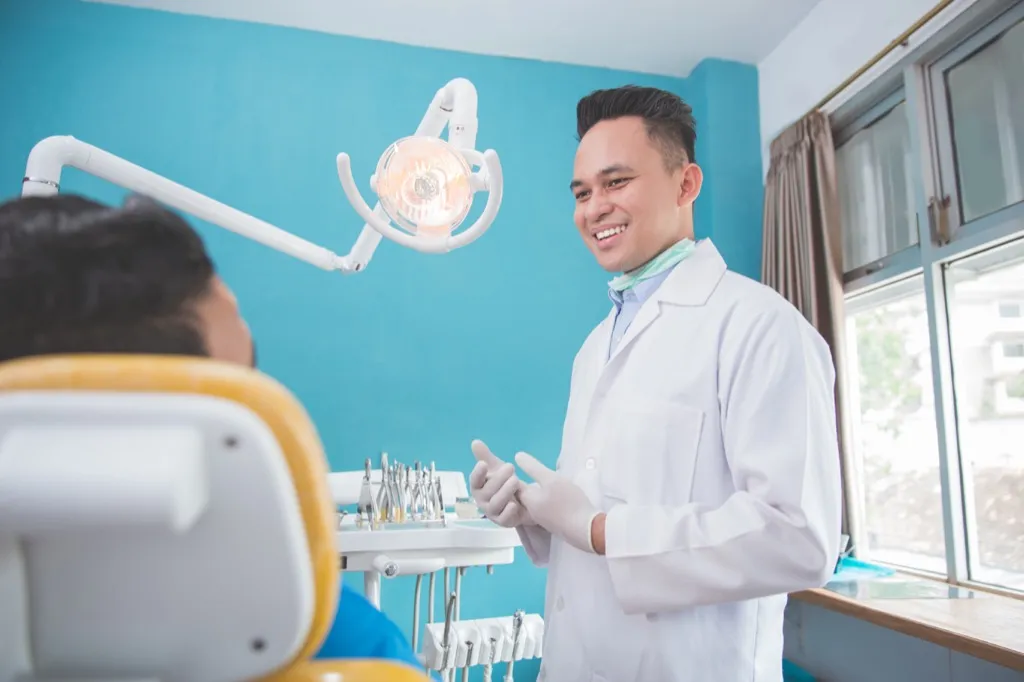
If you'd rather leap off a tall edifice than accept a seat in the dentist's chair, blame dad. Yeah, the transmission of fear from parents to children through socialization has been scientifically proven to include dental visits. In a 2012 study published in the International Journal of Paediatric Dentistry, researchers establish that, if i family member experiences astringent feet about dental work, the residuum of the family unit is vastly more than likely to feel the aforementioned way. Additionally, children are most likely to take their emotional cues from their fathers, rather than their mothers, when it comes to visiting the dentist.

Pain is deviously difficult to measure out and compare between individuals. What sends 1 person into tears may be barely noticeable to another, and the difference is at to the lowest degree partly genetic, co-ordinate to inquiry presented at the American Clan of Neurology'due south almanac meeting in 2014. For their research, scientists isolated four item genes that touch the fashion a person perceives hurting. This is exciting news for people with chronic pain, as information technology could lead to a deeper understanding of the condition—and amend ways to treat information technology.

You probably know that traits like eye color, hair colour, and earlobe shape are genetically inherited. Even so, co-ordinate to the American Psychological Association, what y'all exercise with those features is besides genetically determined. That'south right: You lot tin can give thanks mom and pop for your facial expressions. As Scientific American reported in 2006, some people who were born blind—or were among a pair of siblings separated at birth—made similar facial expressions every bit their parents and other relatives despite never having learned them past sight. (Fun fact: Charles Darwin noticed the phenom a century agone.)

Some lucky folks experience a "runner's high" during or after practice, which is caused by production of dopamine in the encephalon. Even so, as revealed in a 2015 study published in Medicine & Science in Sports & Exercise, roughly a quarter of the population has a genetic trait that slows the production or reabsorption of exercise-related dopamine, making working out an unrewarding job.
These people tin detect other ways to derive pleasure from exercise by doing activities they enjoy, similar swimming, rock climbing, or road biking—it just may be a bit more difficult to find biological motivation.

Is there a drug as entwined with American civilisation as caffeine? Some people just can't first their day without a cup of joe (or 4). Yet, others merely notice it makes them feel jittery and anxious. In fact, co-ordinate to a 2010 study in Psychopharmacology, scientists believe that genetics business relationship for somewhere betwixt 36 pct and 58 percentage of the differences in the way people metabolize caffeine. The fashion your brain processes the chemicals adenosine and dopamine determines whether yous'll experience insomnia, feet, or, in the worst case, withdrawal symptoms.

Having the right variant of the 5HT2A serotonin-receptor gene might make you more popular—at least, if you're a higher-age male. People with the so-chosen "Thou variant" of this gene tend to be impulsive and intermission more than rules, making them more pop with their peers. In 2009, researchers at Michigan State University studied this phenomenon by having immature men plan and throw parties. According to the partygoers, the men with the G variant were considered more pop. Whether this applies to other demographics in other environments (for instance, where dominion-breaking is not desirable) has all the same to exist seen.

For some people, procrastination feels as natural every bit eating, breathing, and sleeping—and it's something they may have picked upwardly from mom and dad. According to a 2014 report published in Psychological Science, about half of procrastination tendencies tin be chalked up to genetics. What's more than, according to a 2018 study too published in Psychological Science, those with a larger amygdala—the encephalon's emotional processing center, and something that by definition is passed down from your folks—were more than likely to procrastinate.

Historic period very well may exist "simply a number," just that doesn't mean the number is always accurate. Every bit it turns out, telomeres—that'due south the part of Dna on the tip of each chromosome—could dictate how one-time we await. According to a 2010 report published in Nature Genetics, in which scientists analyzed more than half a million telomeres, those with shorter tips looked, on average, iii or four years older than those with normal-length tips. And for some skilful ways to plough back the clock, read upwardly on these 100 Anti-Aging Secrets for Looking and Feeling Younger Than Ever.
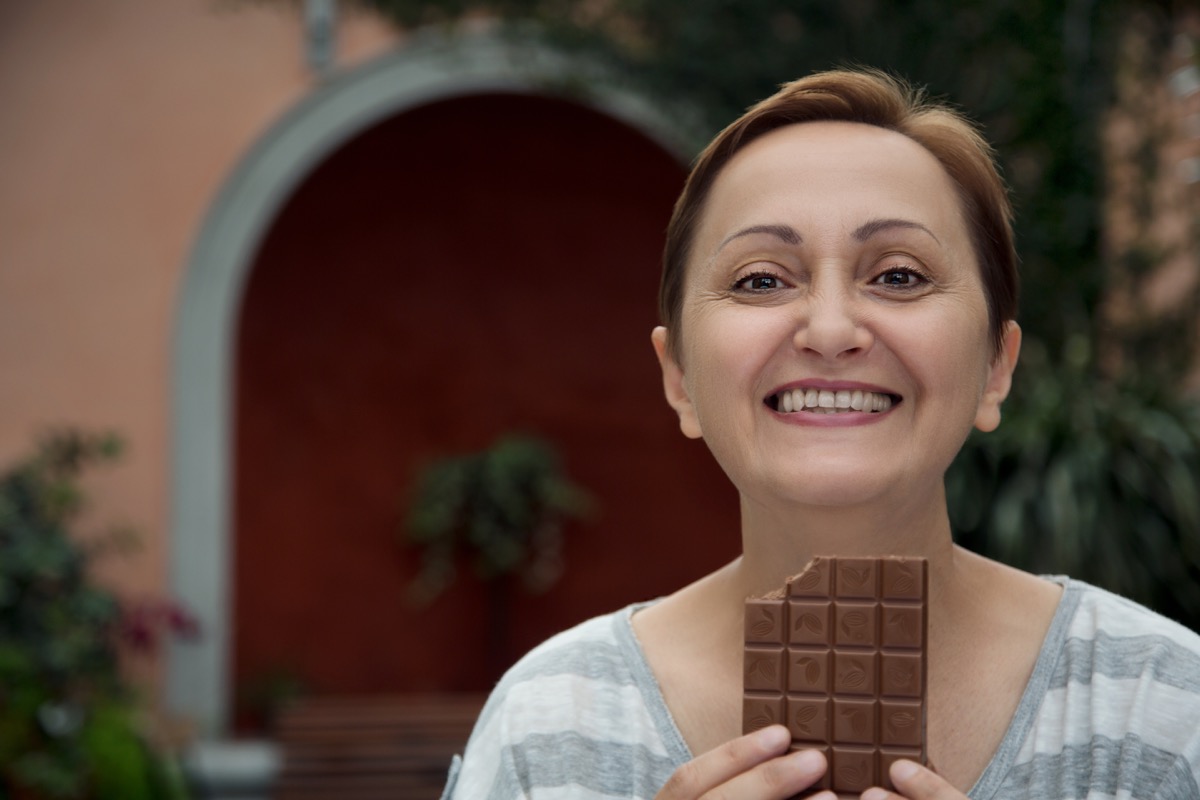
When it comes to deciding between candy and chocolate or chips and French fries, do you ever pick the sweet option? If so, you likely inherited this trait from your parents. In 2018, Danish researchers found that people with a variation of the gene FGF21 have a practically incurable, insatiable sweet molar. They experience cravings and eat more saccharide than other people, only they also tend to have less body fat. Certain, that sounds fantastic, but the news isn't all good: People with this genetic sweet tooth are reportedly more prone to high claret pressure.
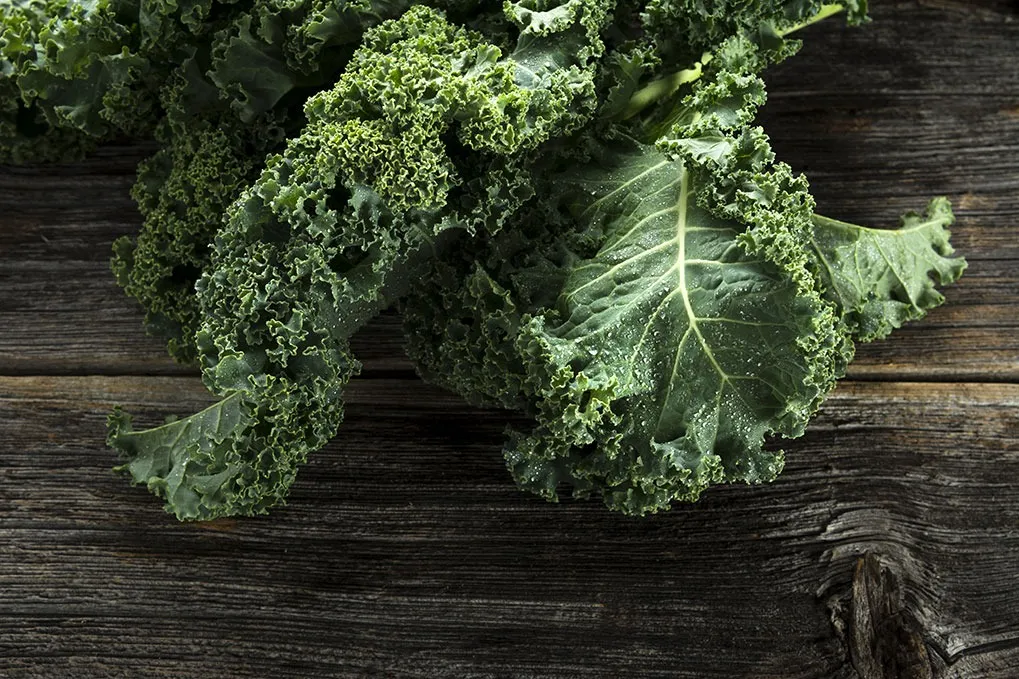
Brussels sprouts, kale, hoppy beers, and night chocolate all accept a divisive bitterness to them. Chances are, you either honey 'em or you hate 'em. If you're in the first camp, you may take a variation of the gustation receptor gene TAS2R38 that makes your taste buds less sensitive to bitterness. The minority of the population—about a quarter, according to a report from NPR—has the version of TAS2R38 that makes them more sensitive to bitterness.

Skiing and snowboarding can exist risky sports—1 wrong move and you could air current up with a concussion, a broken bone, or worse. But the people who exercise them may be genetically predisposed to taking those risks.
A 2012 report of 500 skiers and snowboarders, published in the Scandinavian Journal of Medicine & Science, showed that a particular genetic variation served as a predictor for risky downhill behavior. People with this variation were more likely to speed downward steep slopes (and, presumably, pop off a couple of 360ºs) than those without it. What's more, scientists think such folks might non procedure dopamine equally efficiently as others, meaning that they need to take more risks to feel the same level of enjoyment. Truly radical.

It turns out that a sunny outlook on life may be an inherited trait. According to a 2011 study in theProceedings of the National University Sciences, the cistron that codes for oxytocin receptors—the cells in your encephalon that answer to the "love hormone"—displays some definite variations in people who are optimistic and accept high self-esteem. (These people also reported feeling highly in control of their own lives.) Notwithstanding, it must be noted that there'southward rarely a 100 percent correlation between a single gene and a complex personality trait, then this is but ane slice of the personality puzzle.

According to the same 2011 Proceedings of the National Academy Sciences study, those oxytocin receptors that help decide a person'south optimism besides help determine some other positive personality trait: empathy.
These people accept a variant of three particular genes that's a good predictor for altruism, prosocial behavior, and a greater ability to cope with stress. The proficient news is that a little more than one-half the population (51.5 percent) has this variation!

Ever looked at the sun and sneezed? You might be suffering from Autosomal Dominant Compelling Helioopthalmic Outburst (ACHOO) Syndrome without fifty-fifty realizing it! Don't worry, though: It'due south a relatively benign condition—the merely symptom is sneezing when yous encounter bright light, particularly sunlight. Though scientists still haven't quite figured out what causes it, every bit revealed in a 2012 study in Medical Genetics Summaries, they surmise that the likelihood of "photic sneezing" is genetically inherited. If 1 of your parents sneezes when they step out into the lord's day, the hypothesis goes, so yous have a l-percent gamble of inheriting this beliefs.

People who are distrustful are ordinarily that style because of environmental factors—after all, if you've been badly hurt in the past, yous're less likely to open yourself up again. Still, the disposition to be trusting may exist more strongly linked to biology. A 2017 study out of Academy of Arizona revealed that identical twins showed like levels of trust when compared with non-identical twins, implying that the difference is probable genetic.

You know 23andMe for offer DNA testing kits that can reveal your beginnings (and other traits). Recently, though, with their Everest-sized mountain of data, they've begun conducting some proprietary inquiry, likewise. In a 2016 paper published in Nature Communications, scientists—who combed over the genes of well-nigh 90,000 individuals—adamant that your DNA tin can dictate whether you lot're a lark or a night owl. Your circadian rhythm, or "trunk clock," essentially tells your body when you're nigh alert—and when you're non. Researchers have pinpointed 15 genetic variants that tin can predict where, exactly, yous autumn on the morning-to-evening spectrum.
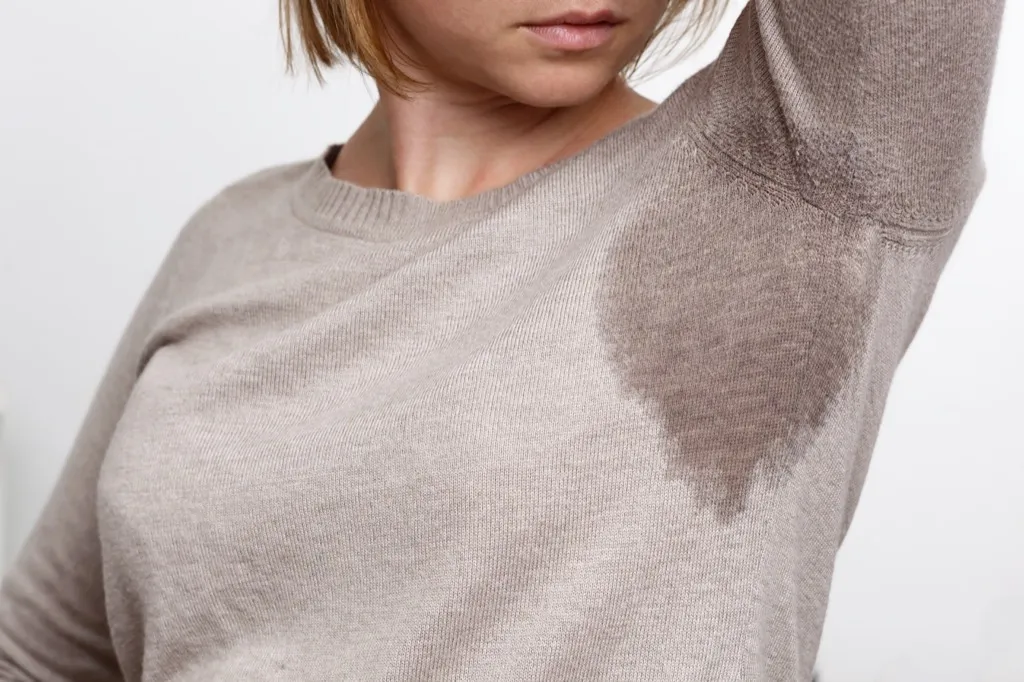
Everybody sweats, just about five percent of the population sweats excessively. This condition is chosen hyperhidrosis, and, while it's non dangerous, sufferers tin find information technology embarrassing. According to the International Hyperhidrosis Society, profuse perspiration runs in the family. In fact, fifty-fifty where yous sweat may be genetically inherited. For example, people who sweat from the hands and feet are besides likely to sweat excessively from their underarms, while people who sweat from the face and chest are as well probable to sweat from the back.

If you've ever been to karaoke dark at a local bar, you'll know that some people have a much greater aptitude for music than others. While ecology factors—the ability to pay for and take lessons, for example—are definitely important, musical ability has a stiff genetic influence. According to 2014 inquiry published inFrontiers in Psychology, perfect pitch and tone deafness run in families, and some people gain the ability to pick out pitch, rhythm, and sound patterns much faster than others. You'd amend hope that the adjacent person upwards to the microphone has the right variation of chromosome 4q!

In improver to musical ability, your genes might also help determine what kind of music y'all similar. A 2009 study conducted by applied science company Nokia, in partnership with Kings' College London, showed that genetic influence accounted for nearly l pct of musical tastes. This human relationship was strongest for pop, classical, and hip-hop music, but almost nonexistent for country and folk music. In other words, folks who love Mozart inherited it from mom and popular, while those who can't get enough Kenny Chesneylearned it from mom and pop. (Interestingly, the influence of genetics on musical taste appeared to decrease as the subjects aged.)
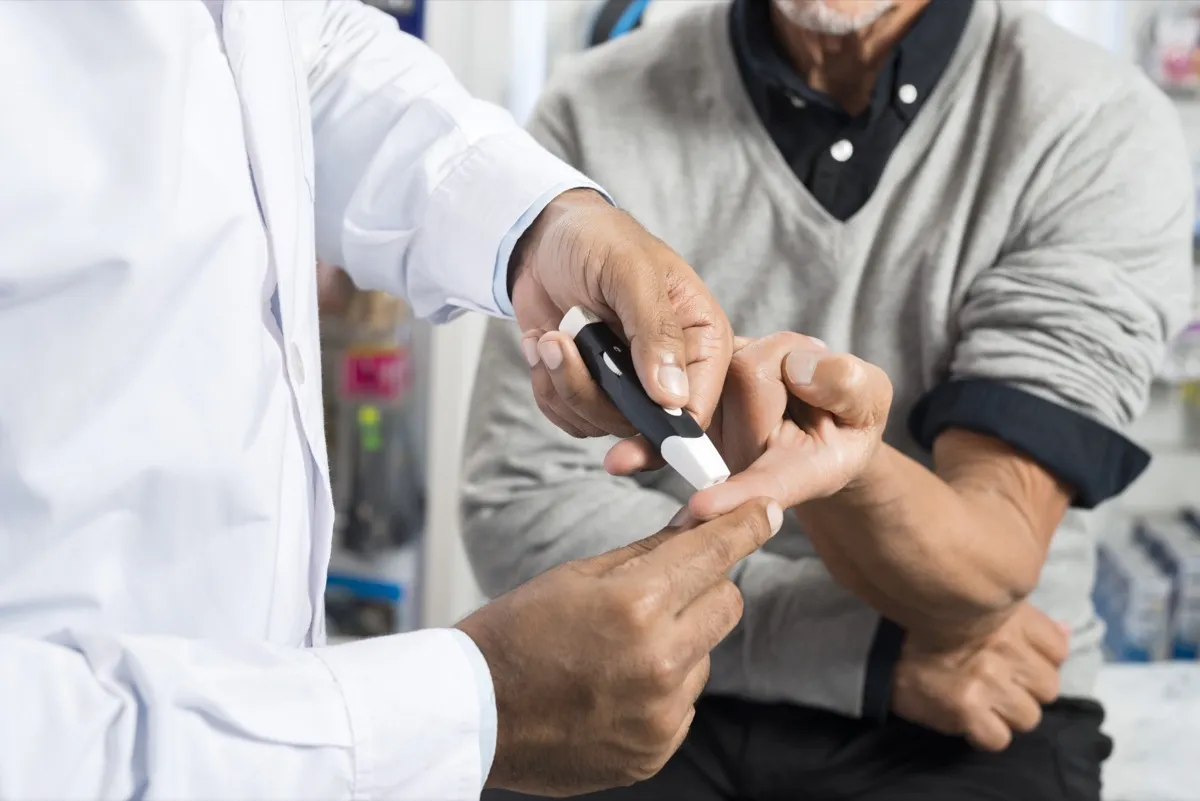
You don't need us to tell yous that the Western nutrition—lots of butter, ruby meat, and pre-packaged or processed foods—isn't exactly salubrious. But, according to a 2009 study published in the American Journal of Clinical Nutrition, the Western diet, when combined with at-risk "genetic predisposition," can heighten the likelihood of developing type-ii diabetes. Oh, and sad, fellas: The researchers found this only applies to men.

When infants go toddlers, many parents begin to wonder what happened to their sugariness little kid. The stage at which toddlers get more capable of exploring the world and exerting their will is often called the "terrible twos," and information technology can sometimes be accompanied by aggressive behaviors: boot, biting, striking, and fighting. According 2014 enquiry out of the Université de Montréal, aggression is much amend predicted by genetic factors than parenting techniques. So fifty-fifty the best parents may occasionally become kicked, bitten, and hit. The good news is that well-nigh children grow out of this phase, particularly if parents respond to this aggression with care.

Information technology tin can be difficult to separate the influence of genetics and the environs when it comes to athleticism. Did Vlad Guerrera, Jr. win 2019's Dwelling Run Derby because he inherited Vlad Guerrera, Sr.'due south genes—or because dad taught him how to hit the baseball game?
The true question is not whether able-bodied ability is a genetically-inherited trait, merely exactly how much is due to genetics and how much is a production of environs. According to the U.South. National Library of Medicine, researchers believe that anywhere from xxx per centum to eighty percentage of athleticism is due to genetic factors. Fifty-fifty the best marathon runners are slightly different on a genetic level from brusque-altitude speed runners.

Intelligence is a catchy subject area, and scientists have been debating the best way to measure out it for centuries. Yet, what we practice know is that genetics plays a major role, co-ordinate to Robert Plomin, deputy director of the MRC Social, Genetic and Developmental Psychiatry Centre at Rex's College London.
Co-ordinate to his 2016 commodity in Scientific American, studies of identical twins bear witness that nigh 50 percent of differences in intelligence tin exist chalked upwards to genetics (when intelligence is defined as full general cognitive ability). The rest is inherited in the ecology sense—pregnant smart parents tend to teach their children habits and skills that will increment their cognitive abilities.
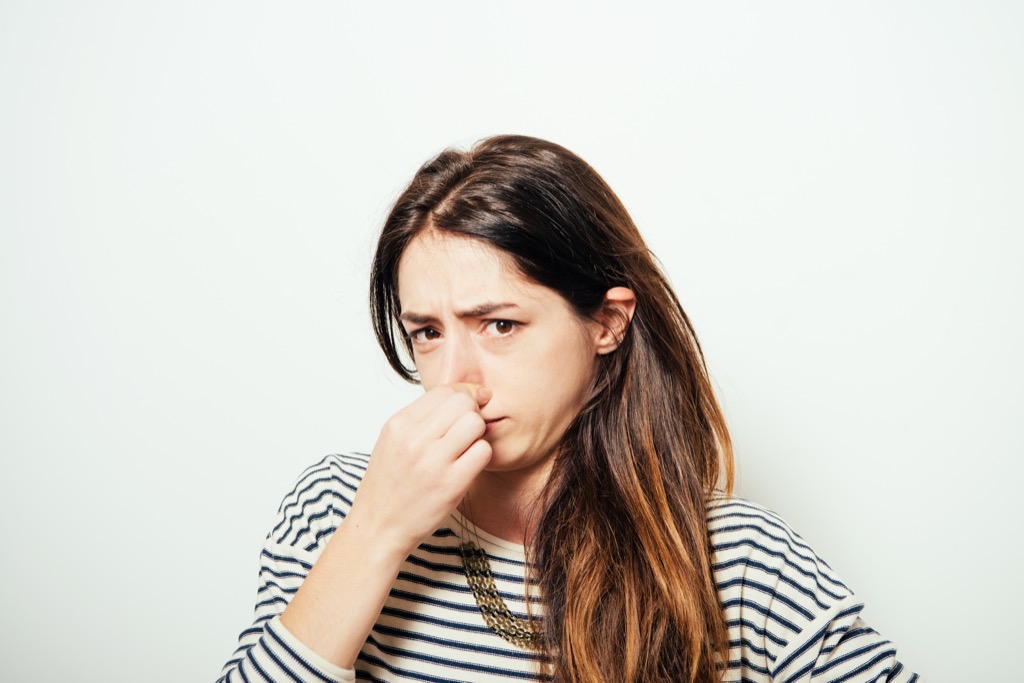
Asparagus is an first-class side dish for a good for you dinner, just some people avoid it for a very specific reason: Every bit the man torso digests asparagus, it produces sulfur-containing compounds that brand the eater'southward urine odour non so great. However, somewhere between 20 percent and 40 percent of the population can't odour these compounds. It's not that their pee doesn't smell funky—it's but that their noses can't observe the odor. According to a 2010 report published in PLOS Genetics (also conducted by 23andMe), just a unmarried genetic mutation frees these people from smelling the bad stuff. Will genetic therapy e'er be available for the rest of us? Merely time will tell. And for more astonishing trivia virtually your body, here are fifty Amazing Health Facts That Will Improve Your Health.
To notice more astonishing secrets about living your all-time life, click here to follow us on Instagram!
Source: https://bestlifeonline.com/inherited-genetic-traits/
Posted by: huffnovence.blogspot.com
0 Response to "How Similar To Your Neighbors Is Your Genetic Makeup"
Post a Comment